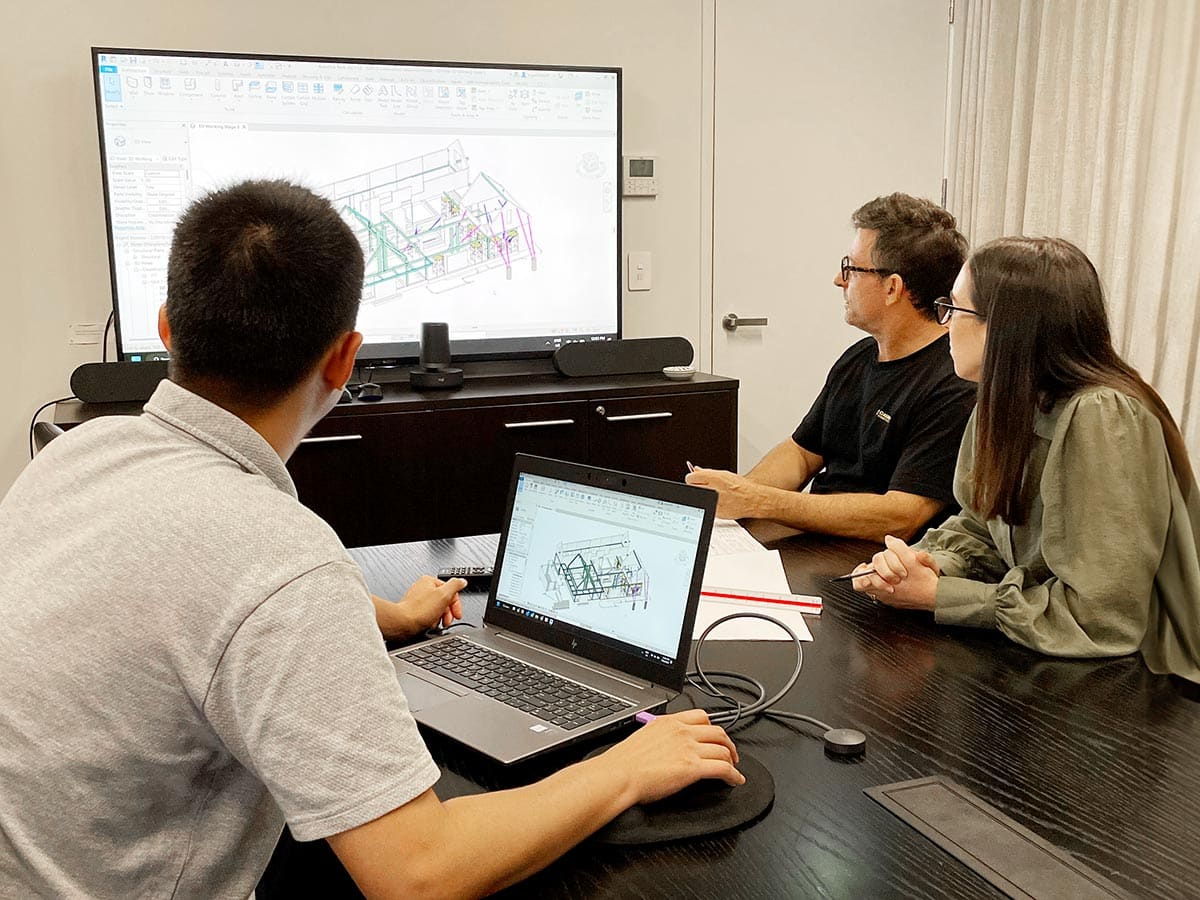
Our in-house building information modelling (BIM) capability is a valuable component of the early contractor involvement (ECI) process and a major contributor to the success of many of our projects. It allows us to iron out any potential issues before the first sod is turned on-site.
How building information modelling adds value
What is BIM?
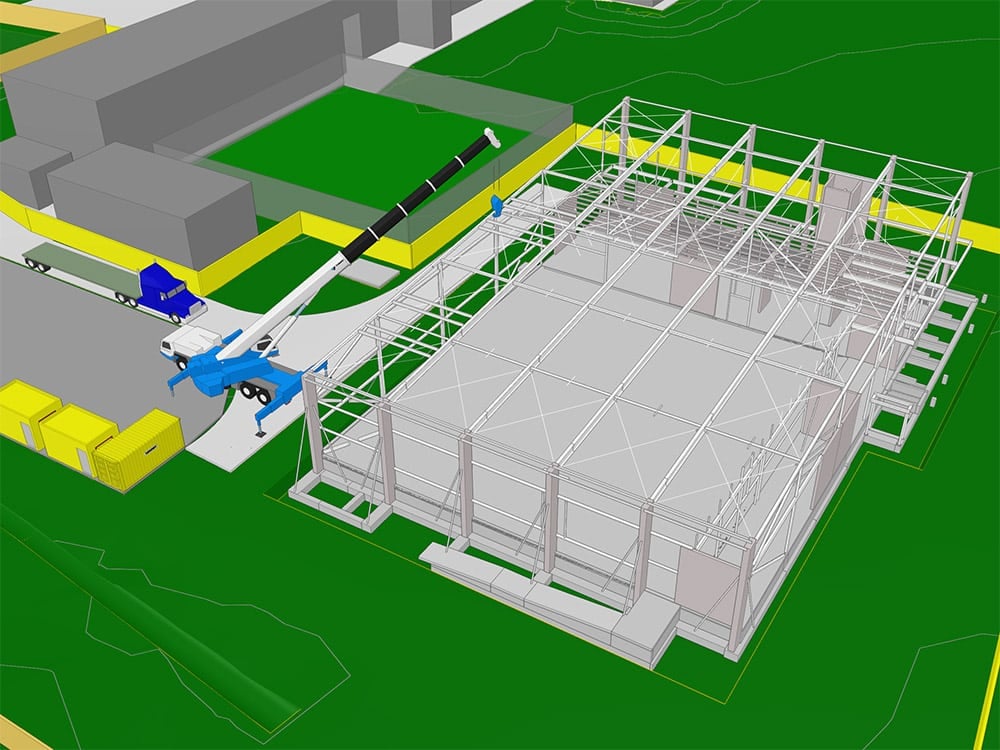
BIM (building information modelling) is a technology that allows us to construct a detailed three-dimensional digital model of a building or infrastructure project before we physically construct it on site. But it’s more than just a model – it’s also an information-sharing and collaboration tool that integrates design, materials, costs, schedules and operational information across the entire project lifecycle. Instead of separate two-dimensional drawings from architects, engineers and contractors, BIM brings everything into one coordinated, intelligent model that allows everyone to collaborate effectively.
Why use BIM?
BIM delivers a step-change in construction productivity and cost-efficiency, enabling better transparency and coordination between disciplines, improving workflows and reducing errors, rework and inefficiencies. It reduces risk by identifying design clashes, constructability issues and health and safety risks early, minimising surprises and delays. In short, BIM shifts the focus from reactive problem-solving on site to proactive planning in a digital environment, where issues are cheaper and easier to fix.
Key benefits of BIM
- Better design coordination: BIM can identify conflicts (such as a pipe running through a beam) before construction starts. This reduces expensive rework and site delays.
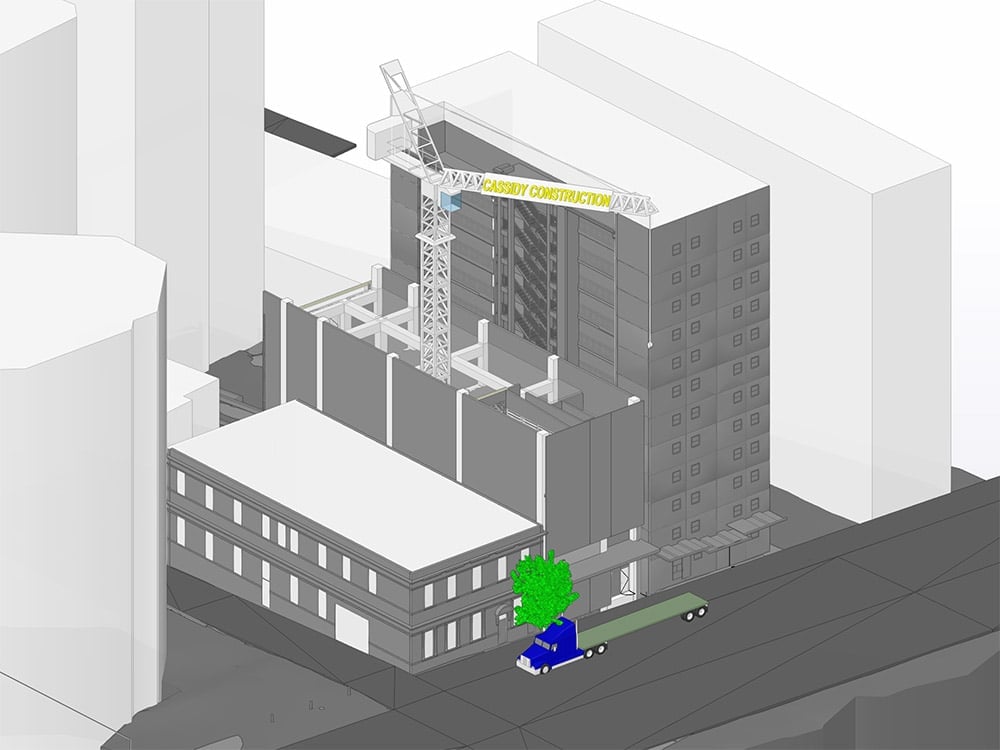
- Faster project delivery: With integrated scheduling, our teams can visualise the build sequence, optimise workflows and identify bottlenecks early, leading to more efficient construction and fewer delays.
- Enhanced collaboration: Because project stakeholders (architects, engineers, contractors and clients) can work in a collaborative common data environment and achieve real-time model synchronisation, we can avoid miscommunication and greatly increase coordination efficiency.
- Better decision-making: Because we can show you the project in 3D before it’s built, it’s easier for you to approve designs and make informed changes early.
- Higher quality outcomes: Better coordination and planning leads to more consistent quality.
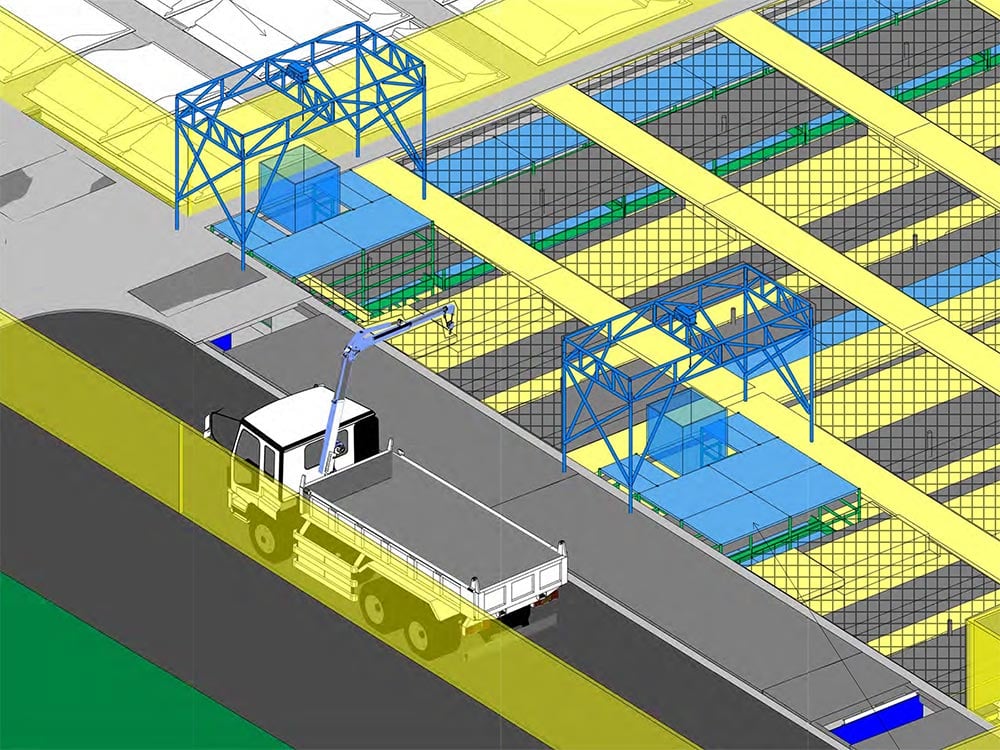
- Improved safety planning: By simulating construction sequencing, we can identify risks before work begins and ensure safer site setups and procedures.
- Lifecycle asset management: BIM doesn’t stop at construction – it provides a digital twin for the building that our clients can use for maintenance, upgrades and operations long after handover.
Q&A
Q: How does Cassidy use BIM to de-risk a construction project?
A: Cassidy’s BIM capability allows us to have a clearer understanding of the project and its construction details so we can provide more efficient methodologies. It also allows us to foresee potential design issues that a traditional two-dimensional plan would not allow. Our BIM technology can reduce time and cost risk for our clients.
Q: What risks are you looking for when you create a virtual model of a project?
A: Construction sequence and design clash risks are the two main risks we search for. Both can cost the client a lot of money to resolve if they’re not identified early.
Q: How does Cassidy do BIM differently from other construction companies?
A: We take a more proactive approach. We believe the more accurately we model, the better we know the project and the better we can plan for it. We model the construction methodology in detail and simulate the construction process to find the most efficient way to build. As a result, we provide the client with confidence and cost certainty.
Q: What’s the best part of your job?
A: The best part of my role is being able to collaborate with all parties and come up with solutions that work on-site. Bringing the digital building into life always brings me great satisfaction.