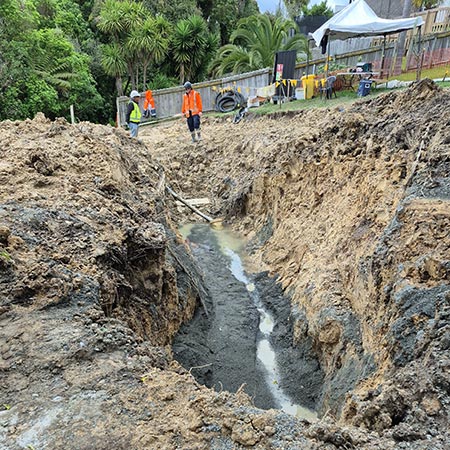
Our task here was to retain a large land slip on a public reserve on Auckland’s North Shore and repair a buried sewer pipe that had fractured when the soil slipped into the valley below.
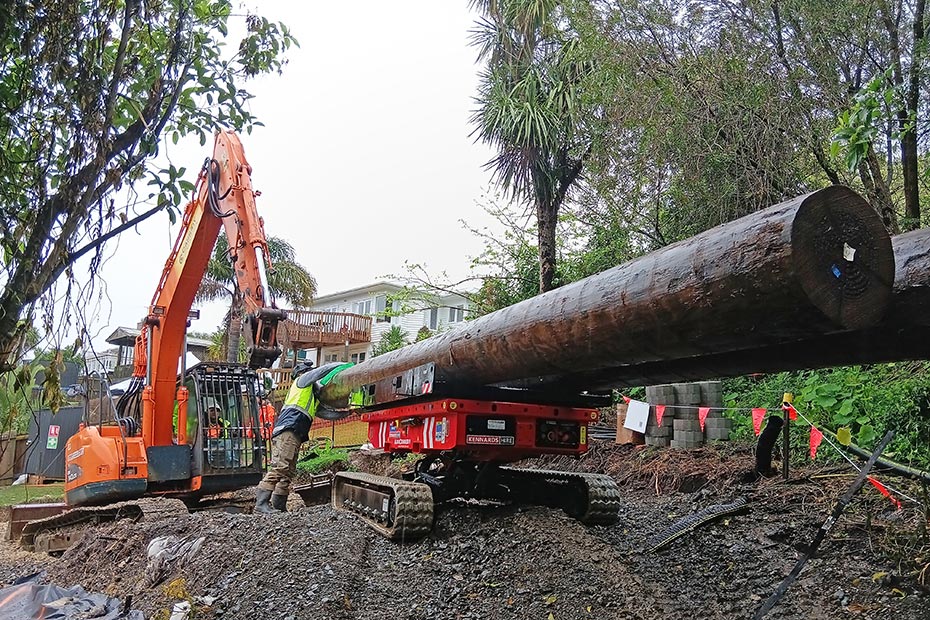
Our first challenge was getting our machinery and materials on-site. We constructed a temporary access road through the bush, making allowance for the extreme contours of the reserve, and used specialised remote control equipment to manoeuvre 24 eight-metre-long, 360mm-diameter timber poles to the site.
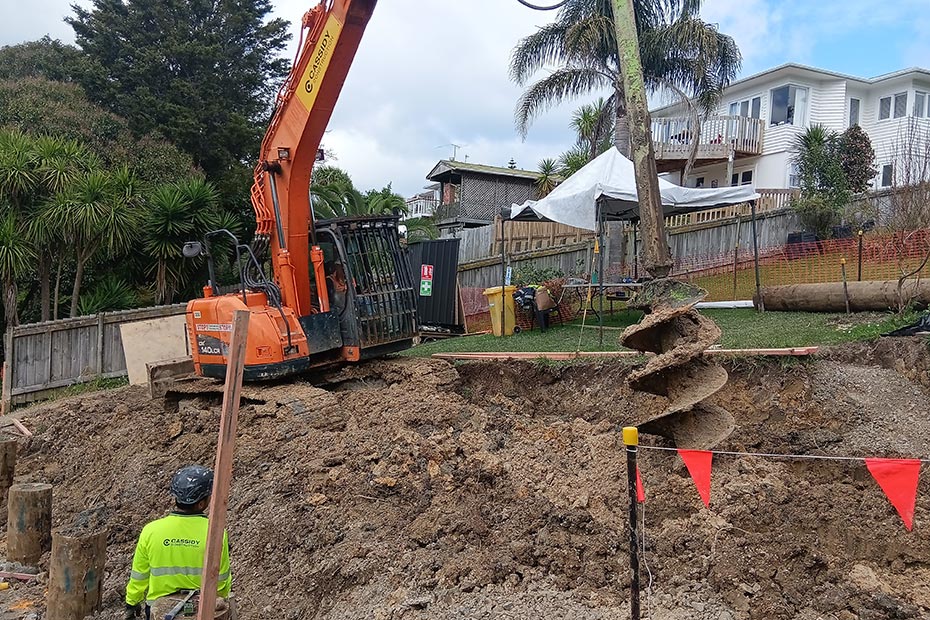
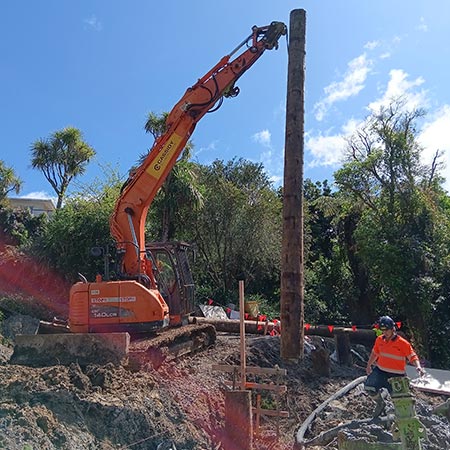
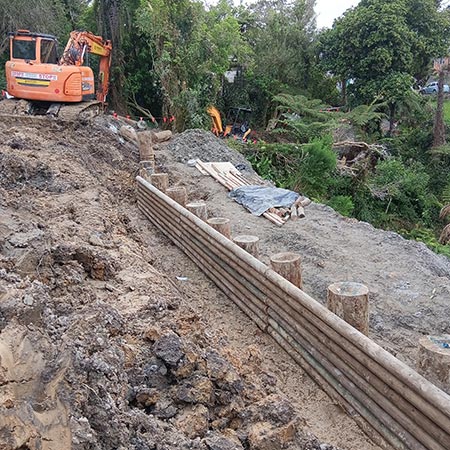
We then drilled 24 holes, lifted the poles into the holes, encased them in concrete and installed timber walers for support. The next phase was to excavate down to locate and replace the damaged sewer line. We could then backfill the upper and lower sides of the retaining wall to the capping, concealing the wall completely, and construct a fence on top of the capping.
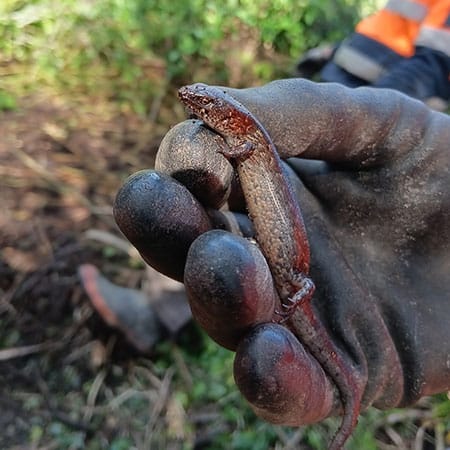
To minimise our impact, environmental specialists monitored our excavator movements while we cleared dense foliage to establish our building platform. They successfully identified three native lizards and relocated them to safe locations beyond the construction area so we could continue our work.
We laid EcoMat below the completed retaining wall to help with soil stabilisation, then removed our temporary access road to complete the flood recovery project.
Our task here was to retain a large land slip on a public reserve on Auckland’s North Shore and repair a buried sewer pipe that had fractured when the soil slipped into the valley below.
Our first challenge was getting our machinery and materials on-site. We constructed a temporary access road through the bush, making allowance for the extreme contours of the reserve, and used specialised remote control equipment to manoeuvre 24 eight-metre-long, 360mm-diameter timber poles to the site.
We then drilled 24 holes, lifted the poles into the holes, encased them in concrete and installed timber walers for support. The next phase was to excavate down to locate and replace the damaged sewer line. We could then backfill the upper and lower sides of the retaining wall to the capping, concealing the wall completely, and construct a fence on top of the capping.
To minimise our impact, environmental specialists monitored our excavator movements while we cleared dense foliage to establish our building platform. They successfully identified three native lizards and relocated them to safe locations beyond the construction area so we could continue our work.
We laid EcoMat below the completed retaining wall to help with soil stabilisation, then removed our temporary access road to complete the flood recovery project.