We’ve completed many projects at Watercare’s Māngere Wastewater Treatment Plant over the years, but this is one of our largest and most complex to date.
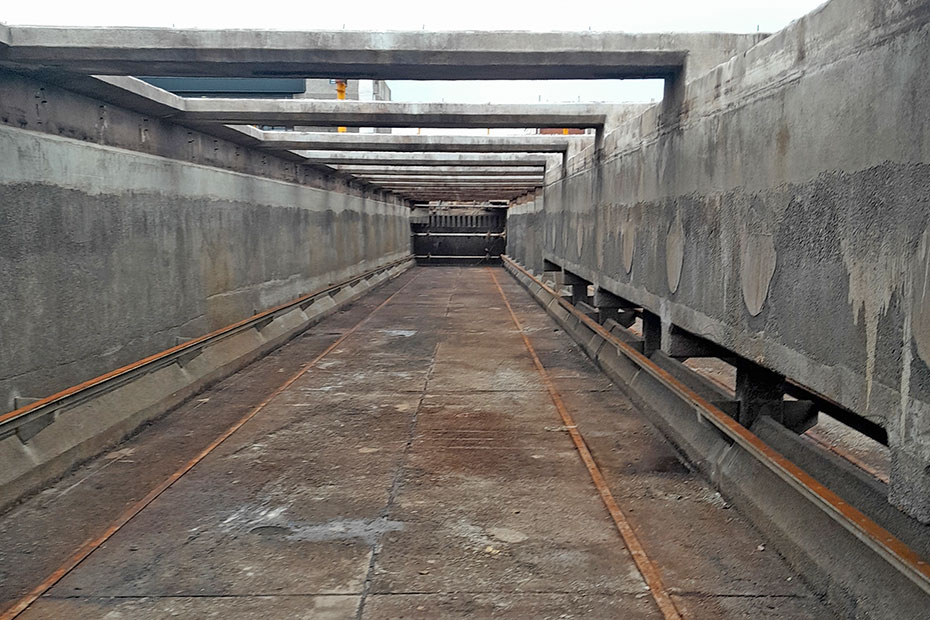
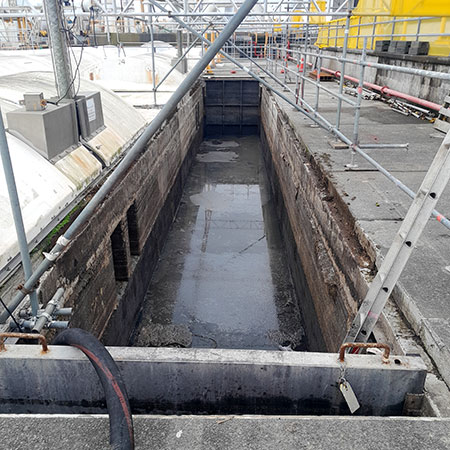
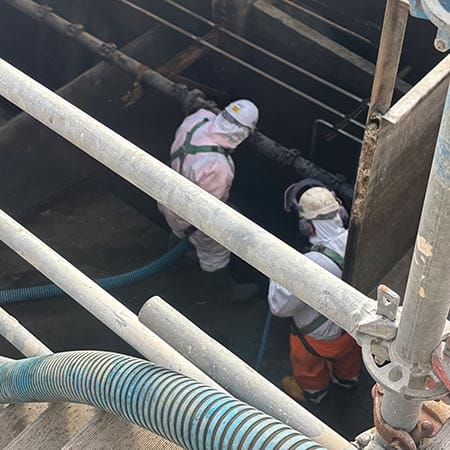
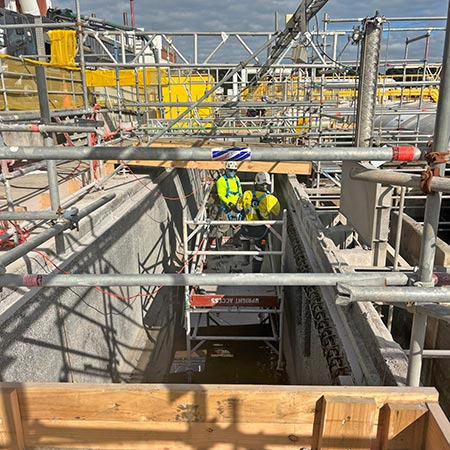
Our team is remediating two buried concrete Primary Sedimentation Tanks (PSTs), each measuring about 70m long by 12m wide. The job involves removing all mechanical access equipment from the tanks, conducting comprehensive concrete remediation, then installing a specialised waterproofing system and upgraded process equipment.
We employed our in-house 3D scanning technology to accurately map the detail of the extensive repairs, and drew on our design and build capabilities to create a bespoke gantry for lifting the tank lids.
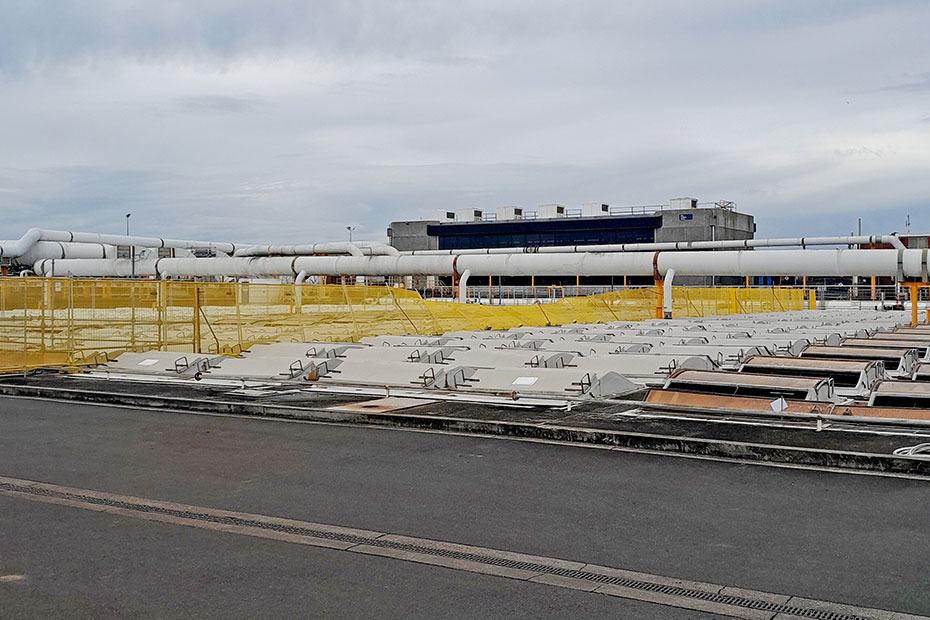
We planned and executed complex, carefully coordinated shutdowns to safely bypass tanks 3&4 while the remainder of the plant, including two tanks upstream and eight tanks downstream, continues to process Auckland’s wastewater.
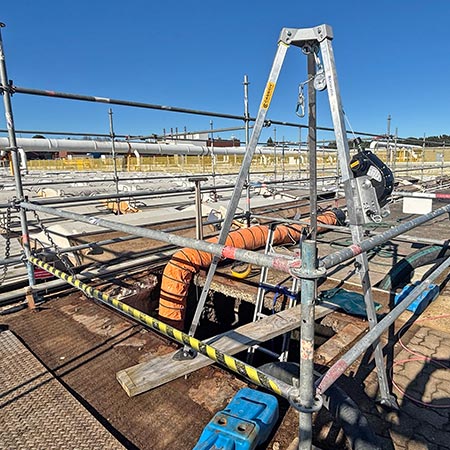
Because our people are working in confined spaces surrounded by biological hazards in a live wastewater treatment plant, we have paid particular attention to identification of health and safety hazards and application of appropriate controls.
This kind of project reflects everything our team is passionate about: meaningful, highly technical work that tackles complex challenges within the industrial sector.
We’ve completed many projects at Watercare’s Māngere Wastewater Treatment Plant over the years, but this is one of our largest and most complex to date.
Our team is remediating two buried concrete Primary Sedimentation Tanks (PSTs), each measuring about 70m long by 12m wide. The job involves removing all mechanical access equipment from the tanks, conducting comprehensive concrete remediation, then installing a specialised waterproofing system and upgraded process equipment.
We employed our in-house 3D scanning technology to accurately map the detail of the extensive repairs, and drew on our design and build capabilities to create a bespoke gantry for lifting the tank lids.
We planned and executed complex, carefully coordinated shutdowns to safely bypass tanks 3&4 while the remainder of the plant, including two tanks upstream and eight tanks downstream, continues to process Auckland’s wastewater.
Because our people are working in confined spaces surrounded by biological hazards in a live wastewater treatment plant, we have paid particular attention to identification of health and safety hazards and application of appropriate controls.
This kind of project reflects everything our team is passionate about: meaningful, highly technical work that tackles complex challenges within the industrial sector.