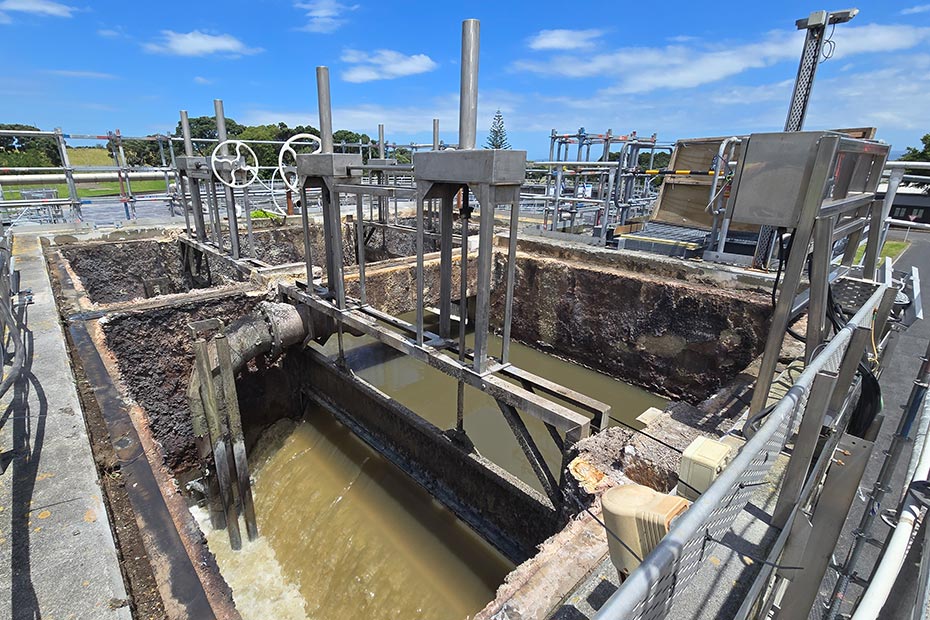
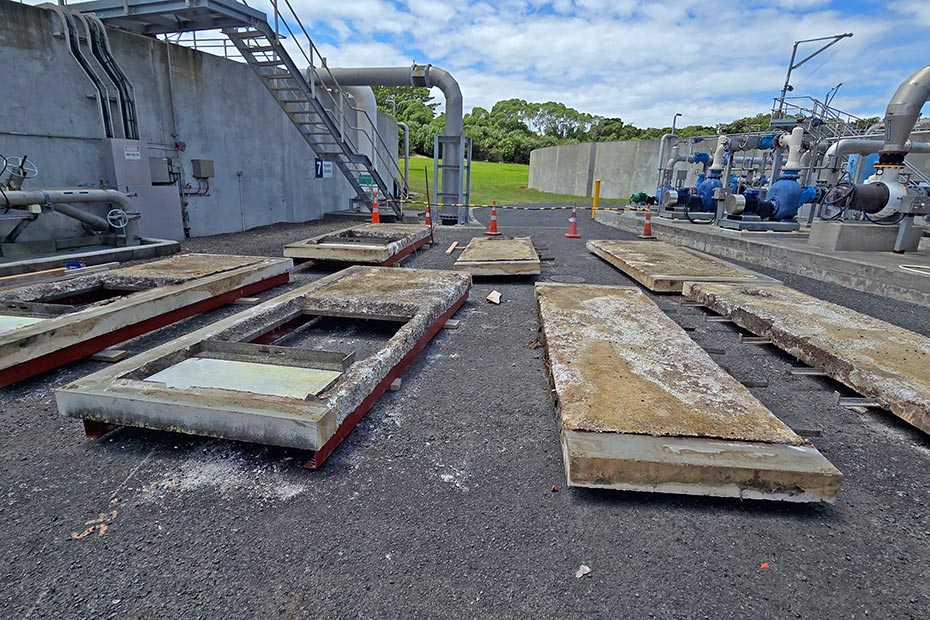
Several months of early contractor involvement (ECI) preceded this concrete remediation project inside one of the splitter tanks that distribute the flow of wastewater at Watercare’s Māngere Wastewater Treatment Plant.
As part of Watercare’s ongoing Assets Upgrades and Renewals programme we were engaged to remediate the internal concrete surfaces, which had been extensively eroded by prolonged contact with hydrogen sulphate from the wastewater.
Unlike a similar job we had completed on another splitter box at the plant, this one came with a major catch – we had to complete the work while the tank remained in service, channelling flows of about three cubic metres per second.
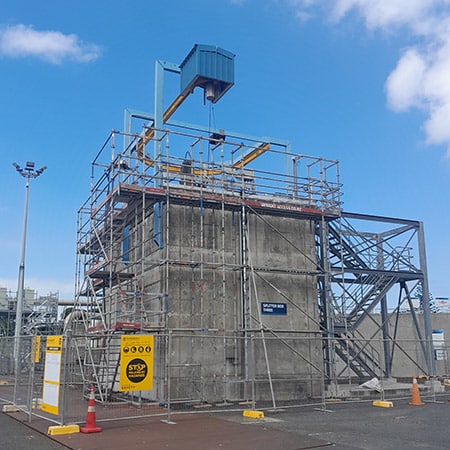
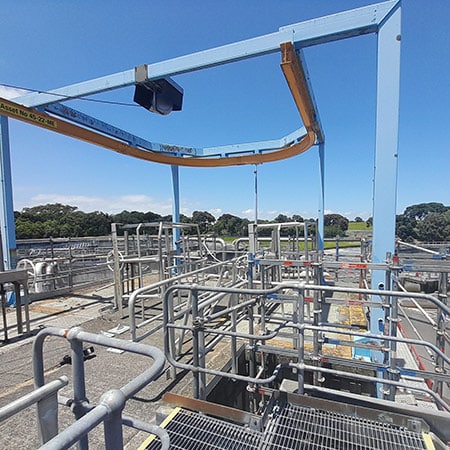
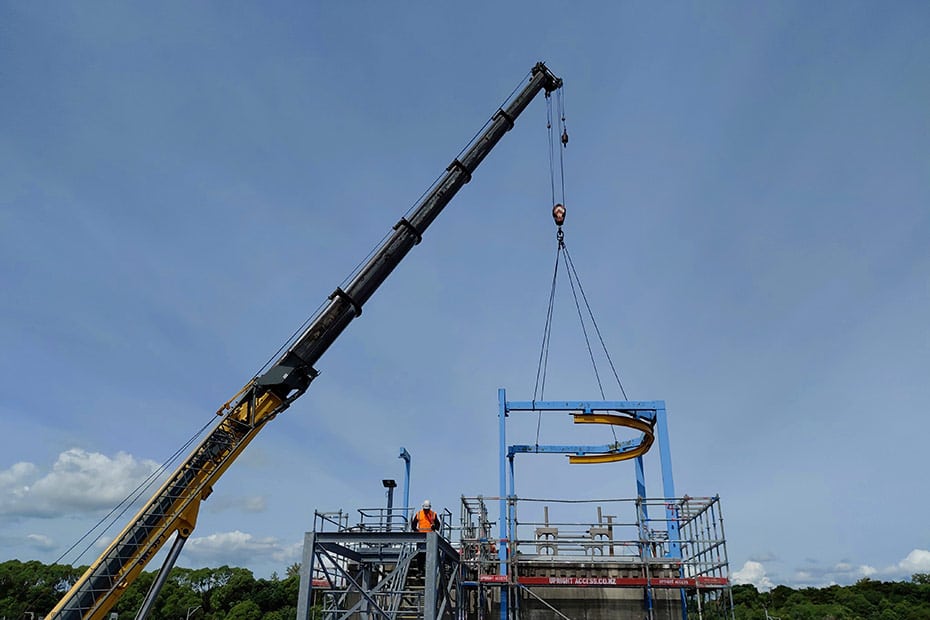
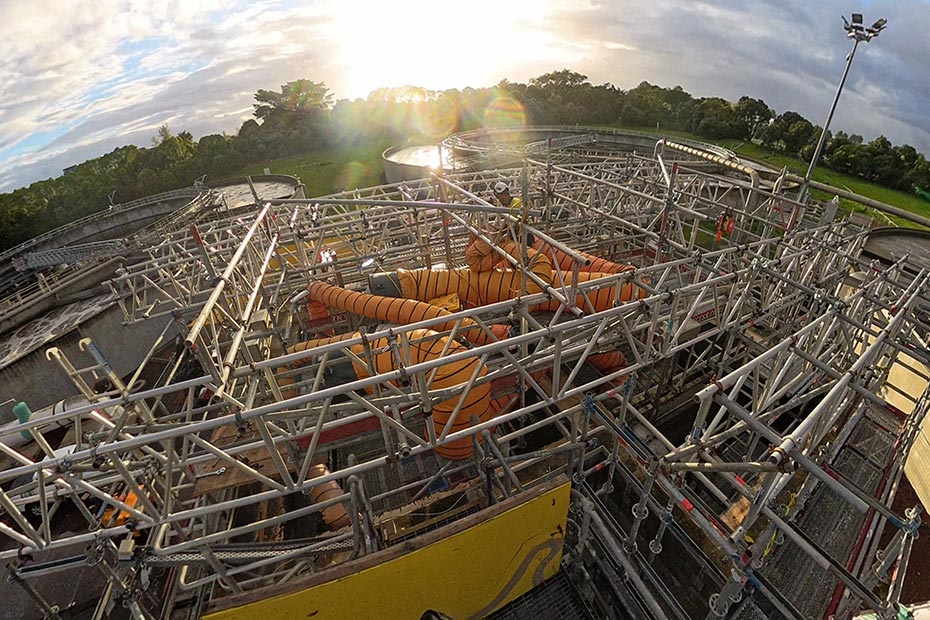
Faced with this conundrum, we worked with Watercare to nail down a methodology that would enable us to safely complete the work. This involved installing a custom-designed hanging scaffold within each chamber so we could repair the concrete to just above the water line while the splitter’s normal operations continued. Our in-house building information modelling (BIM) team accurately digitally modelled the scaffold design so it could be built on the ground and craned into position.
We then worked with the plant’s operations team to plan two overnight shutdowns of the pump stations that feed the splitter tank, so we could hydroblast below the tide mark on the first night, then apply a quick-setting repair product on the second.
This was a challenging project with many critical risks involved with work at height, over water and in confined spaces, but with clever engineering solutions and meticulous planning we were able to deliver for our client efficiently and safely.
Several months of early contractor involvement (ECI) preceded this concrete remediation project inside one of the splitter tanks that distribute the flow of wastewater at Watercare’s Māngere Wastewater Treatment Plant.
As part of Watercare’s ongoing Assets Upgrades and Renewals programme we were engaged to remediate the internal concrete surfaces, which had been extensively eroded by prolonged contact with hydrogen sulphate from the wastewater.
Unlike a similar job we had completed on another splitter box at the plant, this one came with a major catch – we had to complete the work while the tank remained in service, channelling flows of about three cubic metres per second.
Faced with this conundrum, we worked with Watercare to nail down a methodology that would enable us to safely complete the work. This involved installing a custom-designed hanging scaffold within each chamber so we could repair the concrete to just above the water line while the splitter’s normal operations continued. Our in-house building information modelling (BIM) team accurately digitally modelled the scaffold design so it could be built on the ground and craned into position.
We then worked with the plant’s operations team to plan two overnight shutdowns of the pump stations that feed the splitter tank, so we could hydroblast below the tide mark on the first night, then apply a quick-setting repair product on the second.
This was a challenging project with many critical risks involved with work at height, over water and in confined spaces, but with clever engineering solutions and meticulous planning we were able to deliver for our client efficiently and safely.